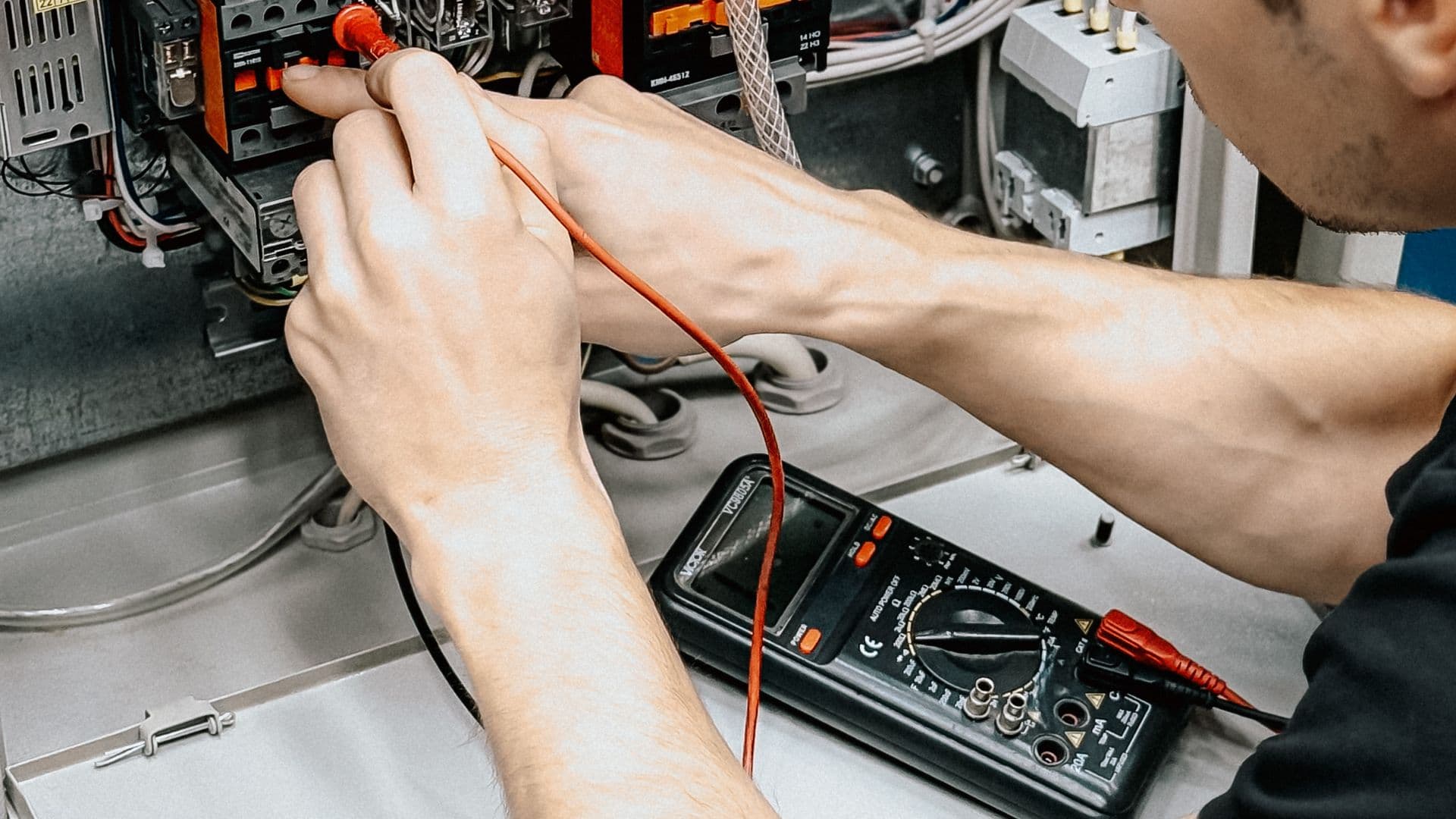
A homeowner smells something hot near the breaker panel at 10pm. Half the house just went dark. They're scared, and they're holding the phone. That is the most valuable call your shop will get all week, and most shops send it straight to a recording.
The reason is boring. Your office closes at 5. The line stays warm long after, because electrical problems don't keep business hours. A breaker doesn't wait for Monday. A burning smell doesn't wait for anyone.
Here's the part that should bother you. The 10pm call isn't just one more lead. It's the highest-ticket, lowest-haggle call in the whole week, and you're routing it to the one thing that guarantees you lose it.
A panel job averages $1,345. Voicemail keeps none of it.
When a homeowner calls at 10pm with a dead panel, you're not looking at a $90 outlet swap. You're often looking at a panel.
HomeAdvisor puts the average panel replacement at $1,345, with most homeowners spending between $518 and $2,190. A straight 200-amp upgrade runs $1,300 to $2,000. Depending on amperage, the full range stretches to $4,500. That is the job sitting on the other end of a scared 10pm phone call.
Even the calls that aren't panels are real money. Hiring a residential electrician averages $350, with licensed electricians charging $50 to $130 an hour plus a $100 to $200 service-call fee just to roll the truck. A single after-hours call you actually capture covers a week of whatever you're paying to keep the line answered.
A $1,345 panel job sent to voicemail isn't a delayed panel job. It's a panel job that another electrician installs while you sleep.
The 30-second triage that sorts a hazard from a "can wait"
Not every after-hours call is a fire risk, and you don't want to wake your on-call tech for a single dead outlet. The whole game is sorting the two fast.
Here's the split that matters. A true hazard is a burning or melting smell, visible sparks or arcing, a hot panel or hot outlet cover, smoke, or a scorch mark. That call gets a human, live, tonight. The homeowner should not be in the house guessing.
A can-wait is one dead outlet, a single tripped breaker that resets, a flickering light on one circuit, or an outdoor fixture that quit. Real work, real ticket, but it books for tomorrow morning without anyone losing sleep.
The gray middle is no power to half the house with no smell. Could be a tripped main, could be a failing panel, could be the utility. That one gets a live person who asks two more questions instead of a recording that asks nothing.
The point of triage isn't to diagnose over the phone. It's to decide who rolls and when, so the hazard gets a truck tonight and the dead outlet doesn't wake anybody up.
Voicemail loses 8 of every 10 callers before they say a word
People think voicemail buys them time. In practice it empties the funnel before anyone leaves a message.
Aira's data is blunt: roughly 80% of callers who reach voicemail hang up without leaving a message, and 85% of people whose calls go unanswered never call back. On top of that, 62% of callers who can't reach a business immediately just call a competitor. We see the same on Vantal test calls: a homeowner who hits a recording at 10pm is dialing the next listing before the beep finishes.
Now layer on speed. 78% of customers buy from the company that responds first, and the classic MIT / InsideSales lead-response study found a 5-minute callback is 21 times more likely to qualify a lead than a 30-minute one. A scared homeowner at 10pm is the most speed-sensitive buyer there is.
Put it together and a hazard call routed to voicemail is a lost panel job, not a delayed one. Eight in ten hang up, most never call back, and the few who do have already booked someone else.
This is what a real hazard call sounds like when a voice actually answers.
Scenario: Homeowner calls Brightwire Electric at 10:14pm. There is a burning smell near the panel and half the house has lost power. Vantal answers and runs the hazard triage.
Synthesized from a real Vantal voice call, shown as a chat for readability. Names changed. The greeting uses a human name; the caller never knows it is an AI.
Three after-hours options, side by side
You have three real choices for who answers after 5pm. Only one of them is voicemail, and it's the one losing you panels.
A human answering service picks up, but pickup speed varies, Spanish isn't guaranteed, and most won't write straight to your calendar. An AI intake line picks up in three rings, runs your exact hazard triage, books the can-waits, and warm-transfers the true hazards to your on-call cell.
| Capability | Voicemail | Human answering service | AI intake (Vantal) |
|---|---|---|---|
Picks up at 10pm | ✗ | ✓ | ✓ |
Average pickup speed | n/a | 30 to 90 seconds | 3 rings |
Runs your hazard triage every time | ✗ | Sometimes | ✓ |
Warm-transfers true hazards live | ✗ | ✓ | ✓ |
Books the can-waits to your calendar | ✗ | Sometimes | ✓ |
Spanish on the first ring | ✗ | Sometimes | ✓ |
Recording and transcript every call | ✗ | Rarely | ✓ |
Capability comparison only. Pricing varies by provider; AI intake pricing depends on call volume and integrations. No-em-dash policy: 'n/a' means not applicable.
There's a number every owner I talk to eventually works out on the back of a napkin: one captured panel job a month covers the entire cost of having the phone answered after hours. The shops that send those calls to voicemail to save money usually aren't saving money. They're handing the highest-margin job of the week to whoever answers second.
What one missed hazard call a week costs you in a year
The cost of a missed after-hours call isn't the call. It's the four-figure job on the other end of it.
Run it straight. A panel job averages $1,345. Miss one a week to voicemail and you're handing roughly $70,000 a year to the electrician who answers. That's before the smaller after-hours service calls, which still carry a $100 to $200 service fee plus hourly on top.
Move the sliders to your own shop's numbers. The output assumes Vantal would have answered the after-hours calls you currently lose.
Revenue you're leaving on the line, per year
$69,940
Assumes a 50% close rate on the calls that get answered. Actual recovery depends on triage rules and your on-call rotation.
See it on your lineCompare that to the alternative. A bilingual human receptionist runs $4,000 to $6,000 a month and still goes home at night. One captured panel job covers the after-hours coverage for a month, and the next eleven are margin. We built Vantal for the sub-5-truck shop that wants the 10pm call answered without hiring a night desk.
The shops that figured this out aren't running better ads. They're answering the phone when the panel job calls.
What to do tomorrow
Four moves, less than an afternoon, nothing to buy to start.
- Pull last month's after-hours voicemails. Count them, flag the ones that mention smell, sparks, or no power. Multiply by your average ticket. That number is your annual leak.
- Write your hazard triage on one page. Burning smell, sparks, hot panel, smoke get a live person and a truck tonight. One dead outlet books for morning. Half the house with no smell gets two more questions.
- Forward your line after 5pm to anything but voicemail. Your on-call cell, a live service, or Vantal. The one rule: the homeowner never hears "please leave a message."
- Call your own line at 10pm. Hear what a scared homeowner hears. Fix the part you'd hang up on.
Hear Vantal answer your line in 30 seconds
Vantal is the receptionist that picks up the 10pm hazard call. Three rings, runs the exact triage your best dispatcher would run, warm-transfers the burning-smell calls to your on-call cell, and books the can-waits into your calendar before the homeowner opens the next Google tab. English and Spanish, every call recorded, every transcript in your inbox.
If you want to hear it on your own line, run the test call. No setup, no card. Or book a 20-minute demo and we'll wire it to your triage rules.
FAQ
What counts as a true electrical emergency at night?
Why does voicemail lose so many after-hours electrical calls?
How much is an after-hours panel job actually worth?
Can an AI receptionist handle an electrical hazard call safely?
What does after-hours answering cost compared to hiring someone?
Keep reading
A burst pipe at 11pm: what good emergency intake actually sounds like
A real-sounding after-hours emergency plumbing call, broken down line by line. The triage questions, the transfer-or-book decision, the confirmation text, and why each move keeps the job on your truck instead of someone else's.
What an AI receptionist costs a plumbing shop in 2026 (and what voicemail costs you)
Four ways to answer your plumbing line: voicemail, a human receptionist, an answering service, or an AI receptionist. The real cost ranges for each, and why the free option is the most expensive once you count the jobs it leaks.
Answering service vs virtual receptionist vs AI: which one your HVAC shop actually needs
Three ways to stop sending HVAC calls to voicemail: a per-minute answering service, a dedicated virtual receptionist, or an AI receptionist. Honest cost ranges and a head-to-head on when each one is the right call.