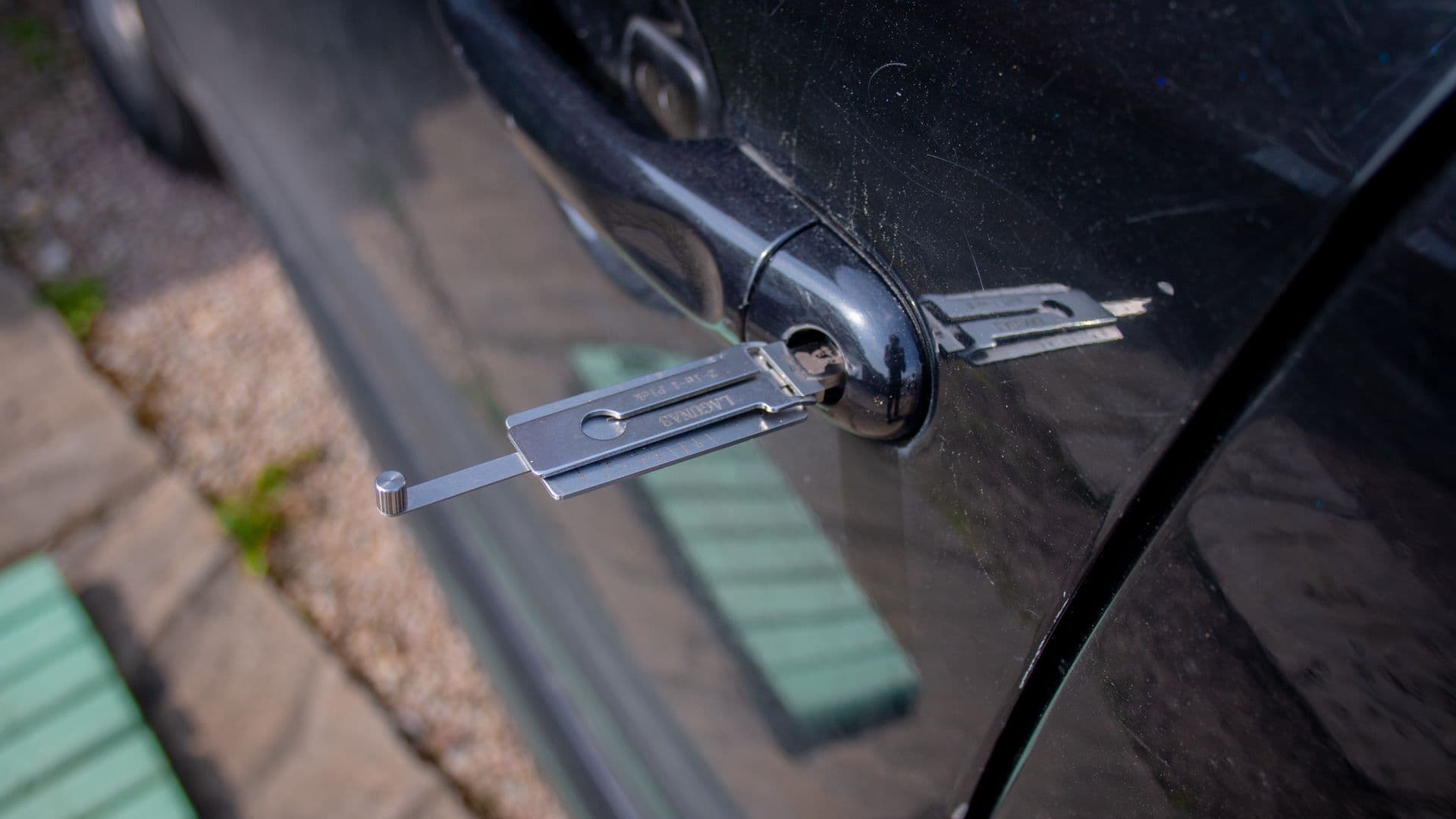
It's 2am. A mom is standing in a gas station parking lot with her toddler locked in the back seat and her keys on the driver's floor mat. She is not opening five tabs and reading Yelp. She taps the first locksmith on the map and dials.
If you pick up, that's your job. If she gets your voicemail, she's already dialing the next listing before your recording finishes the greeting. The job, and the emergency rate that comes with it, goes to whoever answered.
This is the cleanest speed-to-answer business there is. No quote, no comparison, no callback window. The customer has a problem that has to be solved right now, and the only question that matters is whether a human voice picks up the phone.
Why the 2am call pays double the 2pm call
A daytime car lockout from a locksmith runs about $75 to $150 in regular business hours, and the same job after hours runs $125 to $250 (Lock and Tech USA). The gap isn't markup for its own sake. It's the price of being awake and reachable when nobody else is.
Stack a true middle-of-the-night call on top and the premium climbs again. "2 AM on Saturday, expect to pay an additional $50 to $100 in emergency service fees," per the same source, fees that exist to compensate locksmiths for their 24/7 availability and rapid response. That is the entire pitch of the business in one sentence. The premium is paid for answering.
Base car-lockout range and the 2am emergency add-on from Lock and Tech USA ($75-150 regular hours, $125-250 after hours, plus a $50-100 fee for a 2am Saturday call). Thumbtack's 2024 locksmith data puts a typical car-door unlock at $166-192 and an emergency late-night locksmith at $150-250. Bars show the midpoint of each range.
Thumbtack's 2024 pricing data lands in the same place: a standard car-door unlock runs $166 to $192, and an emergency locksmith usually costs $150 to $250 when someone is locked out in the middle of the night. The night call is the high-margin call, and it's also the one most likely to hit a recording.
The customer who picks first wins, and so do you
Locksmith work runs on the same physics as the rest of home services, just turned up louder. Scorpion's home-services research found that 78% of buyers choose the first company to respond, and that in an emergency homeowners book the first contractor who calls back rather than comparing reviews or pricing. Leads answered inside five minutes convert about 21x more often than slow ones.
A lockout compresses that five-minute window down to the length of one phone call. The mom in the parking lot isn't waiting five minutes for anyone. She's giving you three rings.
The same 78% number shows up across the speed-to-lead literature. Verse.ai reports that 78% of customers buy from the business that responds first, and that responding within one minute can lift conversions by up to 391%. LeadAngel cites the same 78% and the same 391% from the Velocify study. When three independent sources land on the same first-responder math, it isn't a fluke. It's the shape of the market.
We see the same thing on Vantal test calls: when a caller has a live emergency, the first voice on the line owns the conversation. There's no second-look phase to win them back in.
What a 2am lockout actually sounds like when you answer
Here's the call you want to catch. Child in the car, summer night, every second counts. The job is not to sell. The job is to confirm you're coming and get a truck moving.
Scenario: A mother calls Sentinel Lock & Key at 2:14am. Her two-year-old is locked in the back seat at a gas station. Vantal answers and dispatches the nearest truck.
Synthesized from a real Vantal voice call, shown here as a chat for readability. Names changed. Greeting uses a human name; the caller never knows it is an AI. Dispatched the closest truck in under a minute.
Notice what did not happen. No quote negotiation, no "let me take a message," no four-minute diagnostic. The call confirmed safety, captured the address, and put a truck on the road. That is the entire after-hours playbook, and a recording can run exactly none of it.
What voicemail actually does to a lockout
People imagine voicemail as a safety net. At 2am it's a trapdoor. When a call goes to voicemail, only about 20% of callers leave a message, and roughly 80% to 85% never call back or leave anything at all (Ring Eden). For an emergency caller with a kid in the car, that number rounds to zero. She is not leaving a message. She is dialing the next pin on the map.
The cost adds up faster than most shops think. Home-service businesses miss around 27% of their inbound calls, and each missed call runs about $1,200 in lost revenue, per Invoca's research (cited by Housecall Pro). For a locksmith, the after-hours calls are the expensive ones, so a missed-call rate weighted toward nights is even pricier than the average suggests.
Illustrative of the conversion gap, not measured figures. Built from Ring Eden's voicemail data (80-85% of unanswered callers never call back) and Scorpion's home-services finding that 78% of buyers go with the first company to respond. Neither source reports these exact percentages for a lockout; they show the direction of the decay, not a precise measured rate.
Three ways to cover the line, head to head
You have three real options for the 2am line, and only two of them book a job: a human answering service, an AI intake, or voicemail. The recording is the one that quietly subsidizes everybody else.
| Capability | Voicemail | Human answering service | AI intake (Vantal) |
|---|---|---|---|
Picks up at 2am | ✗ | ✓ | ✓ |
Average pickup speed | n/a | 30 to 90 seconds | 3 rings |
Runs a child-in-car safety check | ✗ | Sometimes | ✓ |
Dispatches the nearest truck live | ✗ | Sometimes | ✓ |
Texts the caller a live ETA | ✗ | Rarely | ✓ |
Spanish on the first ring | ✗ | Sometimes | ✓ |
Recording and transcript every call | ✗ | Rarely | ✓ |
Capability comparison only. Pricing varies by call volume; a bilingual human answering desk is the costly end of the range. The point is which option actually books the emergency call.
The leak is the same at almost every shop. The 2am lockouts pay the most, and they are the ones most likely to land on a recording while the owner is asleep. Once a voice answers around the clock, the overnight jobs stop walking to the shop across town. The only question is whether a voice is there to catch them.
What one missed lockout a week costs you in a year
The cost of a missed lockout isn't the call. It's the emergency-rate job you don't get to bill. A standard car-door unlock runs roughly $80 to $150, with after-hours and holiday calls adding extra fees on top (Carkeyline). The night calls sit at the high end, and they're the ones most likely to be lost.
Miss one after-hours lockout a week and the year-end number gets ugly fast. Plug your own ticket and miss rate into the math below.
Move the sliders to your own shop's numbers. The output assumes Vantal would have answered the after-hours calls you currently lose to voicemail.
Revenue you're leaving on the line, per year
$24,960
Assumes a 60% close rate on the calls that get answered. Actual recovery depends on triage rules and your on-call rotation.
See it on your lineHome-service shops miss about 27% of inbound calls at roughly $1,200 each, per Invoca's research (cited by Housecall Pro). Weight that toward the after-hours emergencies a locksmith lives on, and the leak is concentrated in exactly the calls priced to pay you most. We built Vantal so the sub-5-truck shop can answer those calls without paying someone to stay up all night waiting for the phone to ring.
What to do tomorrow
Four moves, none of which take more than an afternoon. You don't have to buy anything to start.
- Call your own line at 2am. Hear exactly what the mom in the parking lot hears. If it's a recording, you already know where your overnight jobs are going.
- Forward your after-hours line to anything that isn't voicemail. Your on-call cell, a live service, or Vantal. Anything that opens with a human voice instead of "leave a message."
- Write your lockout intake in plain words. Confirm safety, capture the address, dispatch the nearest truck, text the ETA. One page. Hand it to whoever picks up tonight.
- Count last month's missed overnight calls. Multiply by your average emergency ticket. That number is what voicemail charged you while you slept.
Hear Vantal answer your line in 30 seconds
Vantal is the receptionist that picks up the 2am lockout. Three rings, runs the safety check and intake your shop would run, gets the address, and dispatches before the caller's thumb moves to the next listing. English and Spanish, every call recorded, every transcript in your inbox.
If you want to hear what it'd sound like on your own line, run the test on your shop's number or book a 20-minute demo. No setup, no card.
FAQ
How fast does a locksmith need to answer a 2am lockout?
What does an after-hours car lockout cost a customer?
How much business does a locksmith lose to voicemail?
Can an AI receptionist handle a child-locked-in-car emergency?
What does an AI receptionist cost a locksmith shop?
Keep reading
A burst pipe at 11pm: what good emergency intake actually sounds like
A real-sounding after-hours emergency plumbing call, broken down line by line. The triage questions, the transfer-or-book decision, the confirmation text, and why each move keeps the job on your truck instead of someone else's.
What an AI receptionist costs a plumbing shop in 2026 (and what voicemail costs you)
Four ways to answer your plumbing line: voicemail, a human receptionist, an answering service, or an AI receptionist. The real cost ranges for each, and why the free option is the most expensive once you count the jobs it leaks.
Answering service vs virtual receptionist vs AI: which one your HVAC shop actually needs
Three ways to stop sending HVAC calls to voicemail: a per-minute answering service, a dedicated virtual receptionist, or an AI receptionist. Honest cost ranges and a head-to-head on when each one is the right call.