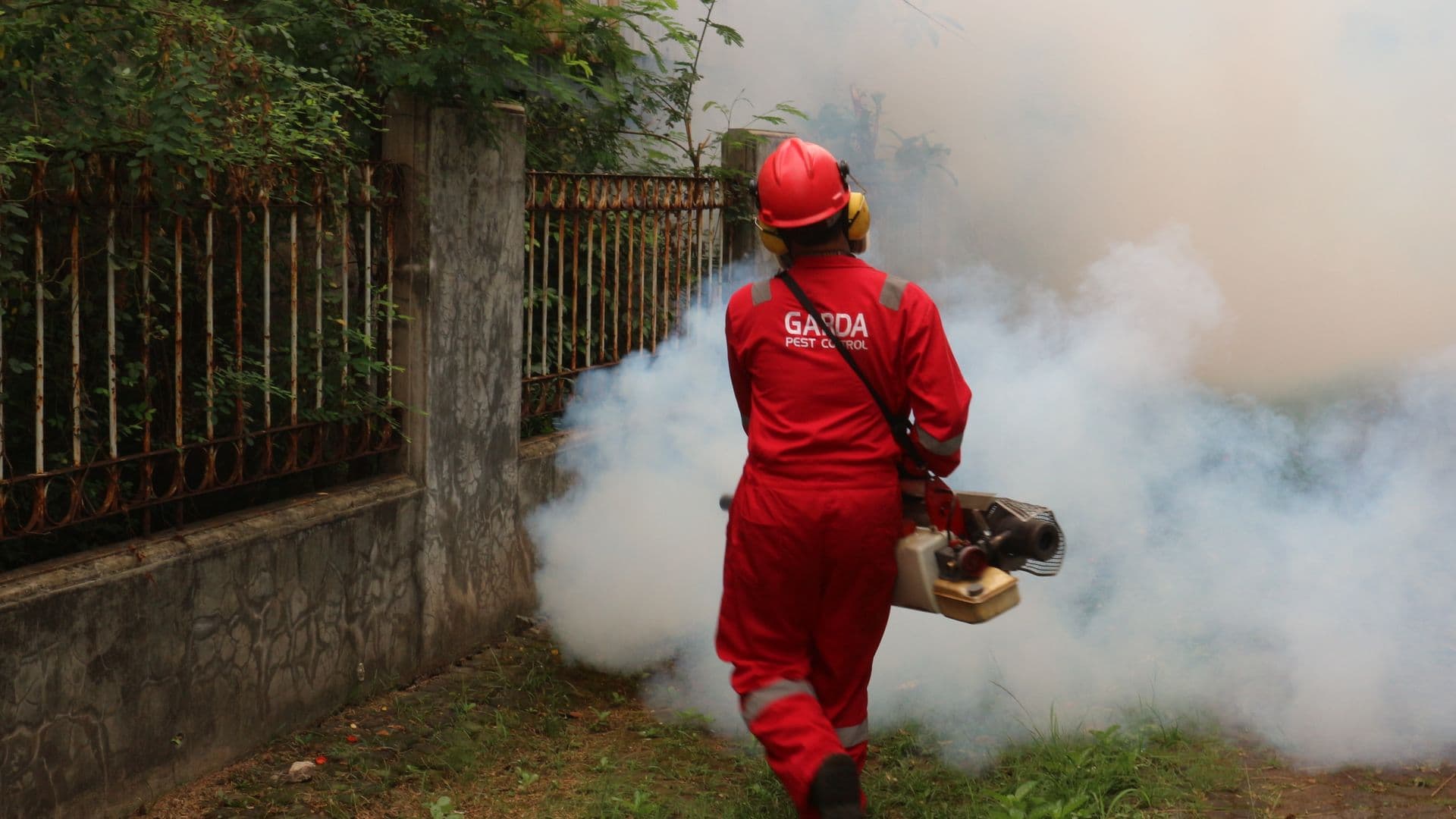
Someone finds bites on their kid at 11pm, pulls back the mattress, and sees them moving. They are not going to wait until morning. They are on Google right now, calling the first number that picks up.
That call looks like one job. A bed-bug treatment is $1,000 to $4,000, with a national average around $2,500 according to HomeAdvisor's 2025 data. The initial treatment alone runs $750 to $950, and the follow-up visits add $415 to $625 each. That is a real ticket on its own.
But the spray is the cheap part. The customer is the asset. A homeowner who just lived through a bed-bug scare is the easiest recurring-plan signup you will ever get, and that contract is where the money actually is.
A one-time spray is worth $200. The customer is worth $2,400.
Here is the number that should change how you staff your phone. ResultCalls put it plainly: a one-time pest control customer is worth about $200, while a recurring customer is worth roughly $2,400 over three years. Same person, twelve times the value, decided by whether you got them on a plan.
ResultCalls, 5 Tips to Build Recurring Revenue for a Pest Control Business: a one-time customer is worth ~$200, a recurring customer ~$2,400 over three years. The same firm notes that improving retention by 5% lifts profit 25% to 95%.
The reason recurring beats one-time is that the plan is priced to be sticky. Housecall Pro's 2026 pricing data puts monthly or quarterly maintenance at $40 to $80 per visit, and a quarterly plan totals $120 to $300 a year. The per-visit price is lower than a $100 to $300 one-time treatment, which is exactly the point. Once a homeowner is on the plan, they tend to stay on it.
Breakwater M&A's pest-control valuation work makes the same point from the buyer's side: once a customer signs up for recurring service, churn is typically low. The hard part is the signup, and the signup happens on the phone. A lot of those phone calls come in after your office closes.
The emergency call is how you win the contract
Pest control is two businesses sharing a phone line. One is steady and recurring: quarterly plans, scheduled visits, the predictable base. The other is the panic call. Bed bugs at 11pm. A wasp nest by the back door on a Saturday. Rodents in the walls that the homeowner can hear at 2am. A real-estate termite letter that has to clear by Friday or the closing falls apart.
The panic calls are the ones with no patience and no price sensitivity. Nobody finding bed bugs at 11pm is comparison-shopping. They want the first competent voice that says "we can help, here is what happens next."
Scenario: A homeowner finds bed bugs at 11:14pm and calls Apex Pest. The office closed at 5. Vantal answers, calms the caller, and books the inspection plus the recurring plan.
Synthesized from a real Vantal voice call, shown as a chat for readability. Names changed. The greeting uses a human name and never mentions AI. Booked the inspection and started the recurring plan in under two minutes.
First to answer wins, and you are closed when it matters
The brutal part of after-hours is that the homeowner is loyal to whoever picks up, not to you. Scorpion's home-services research found that 78% of buyers choose the first company to respond. Not the cheapest, not the highest-rated. The first.
We see the same on Vantal test calls: a panicked caller who hits voicemail does not leave a message and wait. They tap back to the search results and dial the next listing. By morning, the bed-bug job and the $2,400 plan behind it are sitting on a competitor's schedule.
This is the math that decides what your business is worth when you sell it. Breakwater M&A found that a pest-control business with 80%+ recurring revenue trades at a meaningfully higher multiple than one running on 50% one-time service calls. Every after-hours emergency you convert into a plan moves you toward the high-multiple book. Every one you miss keeps you in the low one.
What an unstaffed line costs a pest-control shop per year
The cost of a missed call is the gross margin on the plan you never got to sell. A one-time treatment is $100 to $300, a bed-bug job is $1,000 to $4,000+, and the recurring customer behind either one is worth $2,400 over three years.
Miss one bed-bug emergency a week and you are out the spray, the follow-up visits, and the three-year plan, every single week.
Move the sliders to your own numbers. Set the ticket to your average emergency job plus the plan it leads to. Output assumes Vantal would have answered the calls you currently send to voicemail.
Revenue you're leaving on the line, per year
$187,200
Assumes a 50% close rate on the calls that get answered. Actual recovery depends on triage rules and your on-call rotation.
See it on your lineResultCalls also found that improving retention by just 5% lifts profit anywhere from 25% to 95%. Answering the after-hours emergency is the front end of retention, because the plan you sign during the panic is the plan that renews on autopilot for years. We built Vantal for the small pest-control shop that cannot afford a 24/7 front desk but cannot afford to keep handing away $2,400 customers either.
| Capability | Voicemail | A human answering service | AI intake (Vantal) |
|---|---|---|---|
Picks up the 11pm bed-bug call | ✗ | ✓ | ✓ |
Average pickup speed | n/a | 30 to 90 seconds | 3 rings |
Calms the caller and gives prep steps | ✗ | Sometimes | ✓ |
Books the inspection live | ✗ | Sometimes | ✓ |
Signs up the recurring plan on the call | ✗ | Rarely | ✓ |
Flags the Friday termite-letter deadline | ✗ | Sometimes | ✓ |
Recording and transcript every call | ✗ | Rarely | ✓ |
Capability comparison only. Pricing varies; a full-time bilingual receptionist range can be benchmarked against the [US median receptionist wage published by Indeed](https://www.indeed.com/career/receptionist/salaries). AI intake pricing depends on call volume and integrations.
The trap is that the emergency call feels like a one-off, so it feels skippable. The contract behind it is what makes it the most expensive call you can miss.
What to do tomorrow
Four moves that take less than an afternoon. None of them require buying anything to start.
- Pull a year of after-hours voicemails and bed-bug calls. Count them, then multiply by $2,400 instead of by the spray price. That number is your real after-hours leak.
- Forward your line after hours to anything that is not voicemail. Your cell, a live service, or Vantal. The one thing it cannot be is a recording, because a panicked caller hangs up on a recording.
- Write your emergency triage in plain words. Bed bugs, stinging insects near an entrance, rodents inside, and a dated real-estate letter all get booked live tonight. Routine ant or spider calls get scheduled for the next business day.
- Call your own line at 11pm. Hear exactly what the homeowner with bed bugs hears, then fix the part you would hang up on.
Hear Vantal answer your line in 30 seconds
Vantal is the voice that picks up the 11pm bed-bug call. Three rings, calms the caller, books the inspection, and signs up the recurring plan before they open the next search result. It flags the Friday termite-letter deadline, warm-transfers the true emergencies you choose, and emails you the recording and transcript of every call.
If you want to hear what it would sound like when the panic call hits your line, run the test on your own number. No setup, no card. Or book a 20-minute demo and we will price it to your call volume.
FAQ
How much is a bed-bug treatment worth to a pest-control company?
Why is the recurring contract worth more than the emergency spray?
What happens if I send the after-hours emergency call to voicemail?
Can an AI receptionist actually sell a recurring plan on the call?
What does an AI receptionist cost for a pest-control shop?
Keep reading
A burst pipe at 11pm: what good emergency intake actually sounds like
A real-sounding after-hours emergency plumbing call, broken down line by line. The triage questions, the transfer-or-book decision, the confirmation text, and why each move keeps the job on your truck instead of someone else's.
What an AI receptionist costs a plumbing shop in 2026 (and what voicemail costs you)
Four ways to answer your plumbing line: voicemail, a human receptionist, an answering service, or an AI receptionist. The real cost ranges for each, and why the free option is the most expensive once you count the jobs it leaks.
Answering service vs virtual receptionist vs AI: which one your HVAC shop actually needs
Three ways to stop sending HVAC calls to voicemail: a per-minute answering service, a dedicated virtual receptionist, or an AI receptionist. Honest cost ranges and a head-to-head on when each one is the right call.