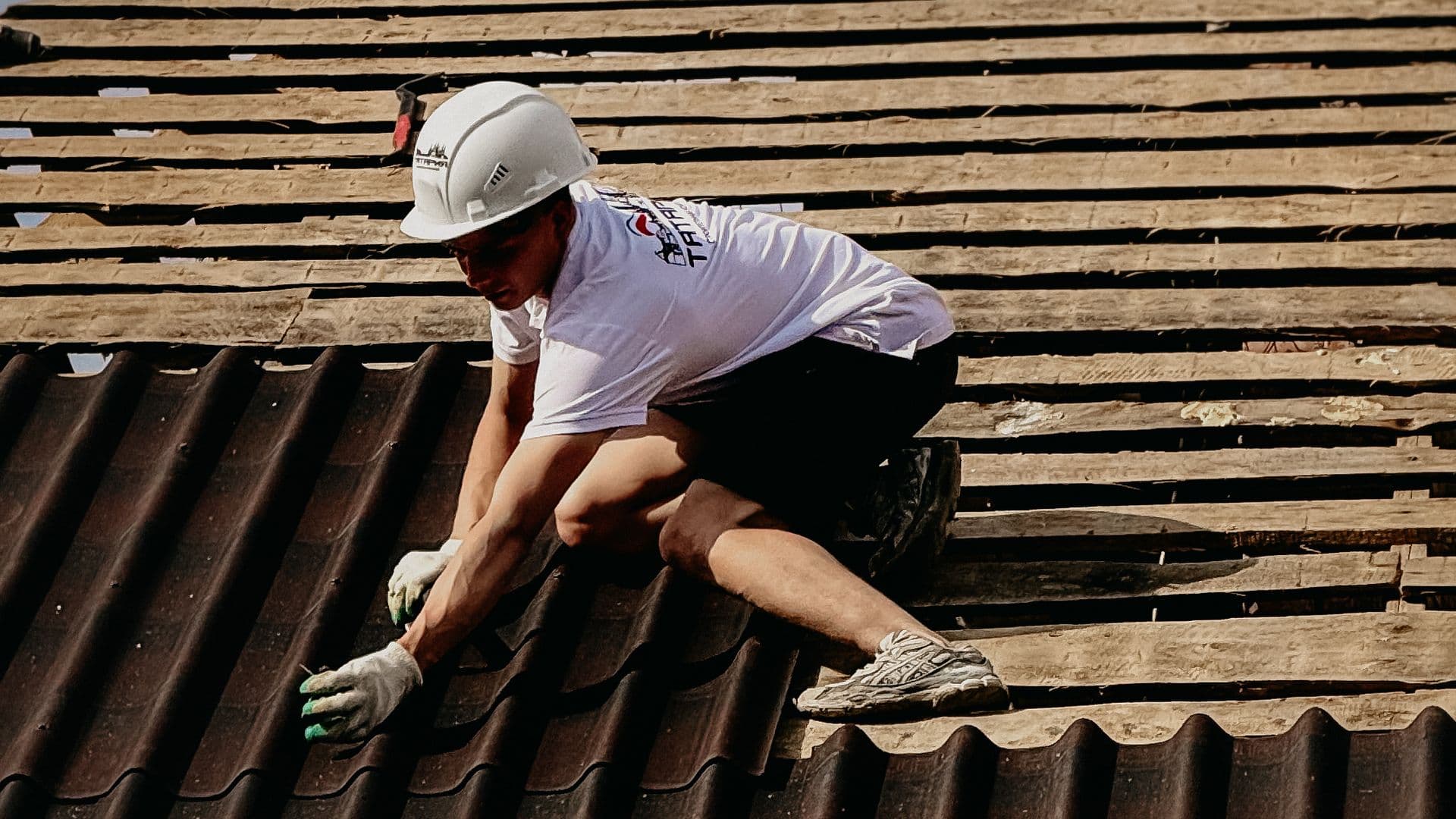
A hailstorm rolls through at 4pm. By dinner, every homeowner on three streets has a dented gutter, a neighbor pointing at their roof, and an insurance app telling them to get an inspection booked. By 9pm, they've all called a roofer.
The question isn't whether the demand shows up. It always shows up. The question is whose phone they reach. The shop that picks up live books the inspections for the whole block. The shops that send those calls to voicemail spend the next morning calling back homeowners who already signed with somebody else.
This isn't a marketing problem. Your ads ran, the storm did your lead-gen for free, the homeowner dialed. The only variable left is the phone.
A hailstorm turns 15 calls a day into 120 in an afternoon
Storm demand doesn't ramp. It spikes. A roofing shop that handles 15 to 20 calls on a normal day can see 80 to 120 calls in the first 24 hours after a major hail or wind event. That's six times your normal volume hitting a phone system sized for a normal day.
And it's compressed. Roughly 80% of the viable leads arrive inside a narrow 48 to 72 hour window, with 30 to 40% of that volume coming after hours. You can't hire for it, because by the time you've posted the job the window's closed. You can't out-work it, because no two-person front office answers 120 calls in a day while also scheduling the trucks.
Composite shape from Talkroute's storm-surge call-volume breakdown (normal 15 to 20 calls/day, 80 to 120 in the first 24 hours, ~80% of viable leads inside a 48 to 72 hour window) and Perceptionist's roofing storm-season data (same surge multiple, 25 to 50 voicemails in the first 24 hours). Treat as an industry shape, not a single shop.
The shop next door has the same trucks and the same crew. The thing that decides who owns the neighborhood is who can absorb a 6x spike without dropping calls.
25 to 50 voicemails on day one, and most are gone by morning
Here's what the surge actually does to an unstaffed line. That same wave of post-storm calls produces 25 to 50 voicemails in the first 24 hours. Your front office sees the stack the next morning and starts dialing back.
Too late. The homeowner who hit your voicemail at 7pm didn't wait. They tapped back to the map, called the next listing, and booked their inspection with whoever answered live. By the time you return the voicemail, you're the fourth roofer to call, pitching an inspection they already have scheduled.
The speed math is brutal and well-documented. Conversion rates are roughly 8x greater when a lead is engaged in the first five minutes versus the five-minutes-to-24-hours window. And almost nobody hits it: only 0.1% of inbound leads are engaged in under five minutes, while 57.1% of first call attempts happen after more than a week. We see the same on Vantal test calls: most roofing lines a homeowner dials during a storm surge never pick up live, and the few that do are the ones booking the street.
A next-morning callback is a five-minutes-to-24-hours lead at best, and during a storm it's worse, because the homeowner had four other roofers to choose from while you slept.
A booked inspection is worth $17,631, and the surge is full of them
Storm calls aren't tire-kickers. They're insurance-driven, which means the homeowner is motivated, the timeline is fixed by the carrier's claim deadline, and the ticket is large.
Carriers put the average residential roof replacement at $17,631 in 2025, up 33% from the 2021-to-2024 average. The all-in homeowner number runs higher: an architectural asphalt shingle roof, the most common type, lands into the low-to-mid five figures. Either way, a single booked storm inspection is the front door to a five-figure job.
The category is enormous and growing. Verisk's roofing trend report puts 2024 U.S. roof repair and replacement claim value at nearly $31 billion, up almost 30% since 2022. Roof line items make up more than a quarter of all residential claim value, and wind and hail drive more than half of all residential claims. The storm surge isn't a side market. It's the market.
| Metric | Normal week | Storm week |
|---|---|---|
Inbound calls per day | 15 to 20 | 80 to 120 |
Viable leads window | spread out | 80% in 48 to 72 hrs |
Voicemails, first 24 hrs | a few | 25 to 50 |
Avg roof replacement ticket | $17,631 | $17,631 |
Value of 10 missed calls | n/a | six figures in pipeline |
Ticket figures from [Insurance Journal / Verisk 2025 data](https://www.insurancejournal.com/magazines/mag-features/2026/06/22/874418.htm) (avg residential roof replacement $17,631, +33% vs the 2021-2024 average) and [Bill Ragan Roofing](https://www.billraganroofing.com/blog/average-cost-replace-roof) (architectural shingle all-in into the low-to-mid five figures). Surge and voicemail figures from [Talkroute](https://talkroute.com/how-roofing-companies-handle-storm-surge-call-volume/) and [Perceptionist](https://perceptionist.com/roofing-storm-season-call-surge/).
And the surge is getting more frequent, not less. Non-catastrophic wind and hail roof claims grew from 17% of residential roof claims in 2022 to 25% in 2024. Ordinary storms, not just the named catastrophes, are throwing off these surges. The shop built to absorb them wins more streets every year.
What a 90-second storm intake actually sounds like
You don't need a salesperson on the phone during a surge. You need someone who picks up live, confirms the storm hit their address, and gets the inspection on the calendar before the homeowner dials the next roofer. That's a scripted job, and it's the one that breaks first when 120 calls land in a day.
Scenario: Homeowner calls Summit Roofing at 7:40pm, the evening of a hailstorm. Hundreds of neighbors are dialing roofers at the same time. Vantal answers live and books the inspection.
Synthesized from a real Vantal voice call, shown as a chat for readability. Names changed. Booked the inspection in 81 seconds while the rest of the street was hitting voicemail.
We built Vantal for exactly this: the small shop that wants to answer all 120 storm calls without standing up a call center it only needs three days a season. Same script a big regional outfit runs, no surge hire required.
What the surge costs you, and what answering it would recover
The cost of a missed storm call isn't the call. It's the margin on the roof you don't replace. At a $17,631 average ticket, the arithmetic gets ugly fast. Lose a handful of calls a day during a three-day surge and you've handed the neighborhood to whoever answered.
Set it to a storm week, not a normal one. Bump missed-calls-per-week to what a surge actually drops on your line. The output assumes Vantal would have answered the calls you currently lose to voicemail.
Revenue you’re leaving on the line, per year
$4,584,060
Assumes a 50% close rate on the calls that get answered. Actual recovery depends on triage rules and your on-call rotation.
See it on your lineRun it honestly. A normal-week number looks survivable. A storm-week number, with 25 to 50 voicemails stacking up in a day, is the difference between a shop that grows every hail season and one that watches the trucks across town fill up. The shops that own their market aren't running better ads. They're running a phone that doesn't drop the surge.
What to do tomorrow
Four moves, none of them expensive, all of them doable before the next storm cell forms.
- Pull your call log from your last storm week. Count the calls, count the voicemails, multiply the gap by your average ticket. That number is what the surge already cost you once.
- Route storm overflow to a live answer, not voicemail. When call two rings while you're on call one, it has to land somewhere a homeowner will talk to. A human, an AI intake, an on-call cell. Anything but a recording.
- Write your storm intake on one page. Confirm the address is in the hail path, capture claim status, book the inspection, text a confirmation. Hand it to whoever picks up.
- Test your own line at 8pm. Call your shop the way a homeowner would the night of a storm. If you hit voicemail, so do they, and so does the whole street.
Hear Vantal answer your storm surge in 30 seconds
Vantal is the intake that doesn't drop the surge. It picks up every call at once, confirms the address is in the storm path, books the inspection straight into your calendar, and texts the homeowner a confirmation before they can open the next listing. English and Spanish on the first ring, every call recorded, every transcript in your inbox.
If you want to hear what it would sound like on your own line during a 120-call afternoon, run the test on your shop's number. No setup, no card. Or book a 20-minute demo and we'll size it to your storm season.
FAQ
How many calls does a roofing company get after a hailstorm?
Why do roofers lose so many storm leads to voicemail?
What is the average roof replacement worth to a roofing shop?
Can an AI receptionist handle a storm call surge without a call center?
What does an AI receptionist cost a roofing company versus hiring for storm season?
Keep reading
Criminal defense intake happens at night: answer before the next lawyer does
Arrest calls, DUI calls, bond questions, and family-member panic do not wait for business hours. Criminal defense firms need a live intake line that captures urgency and books the consult without giving legal advice.
Family law and immigration intake: urgent calls need a calm first answer
Divorce, custody, protective orders, immigration notices, and work-permit deadlines create emotional calls. Law firms win these consults by answering fast, routing correctly, and booking the next step.
Personal injury intake is won in the first five minutes
A car-accident lead is not shopping patiently. They call the next personal injury firm until someone answers, listens, qualifies the case, and books the consult. Here's the intake playbook.